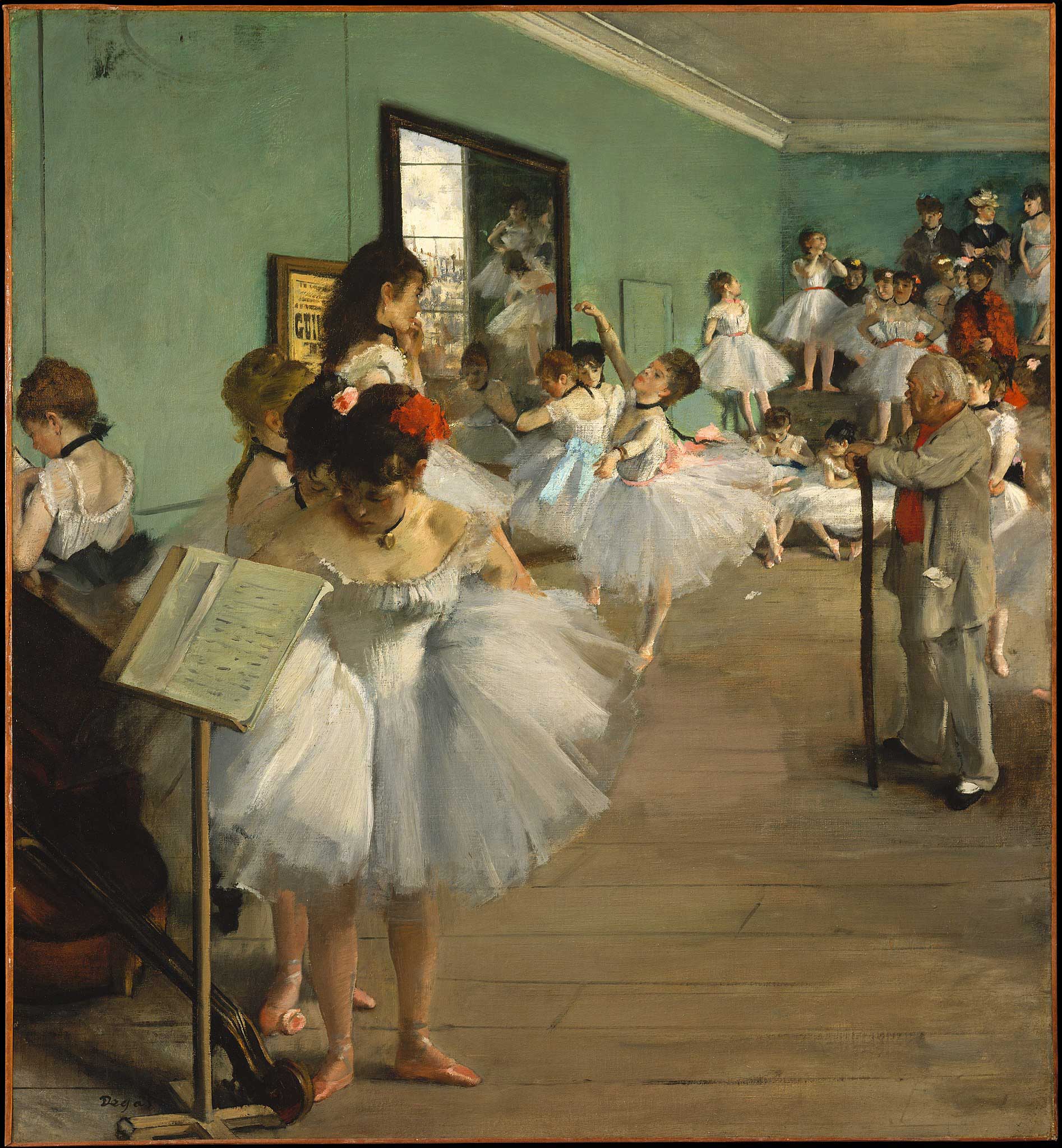
Few painters have captured the spirit of a subject with the intimacy and persistence of Edgar Degas. While his contemporaries turned their gaze toward gardens, landscapes, and bustling Parisian streets, Edgar Degas focused on a world hidden behind velvet curtains: the world of ballet.
Between the 1870s and the early 1900s, Edgar Degas devoted himself to exploring the rehearsal rooms and stages of the Paris Opéra, producing more than 1,500 works of ballerinas in rehearsal, performance, or moments of quiet exhaustion. This body of work, perhaps more than any other, defines the period’s departure from rigid academic styles toward a more modern, psychological, and emotional art.
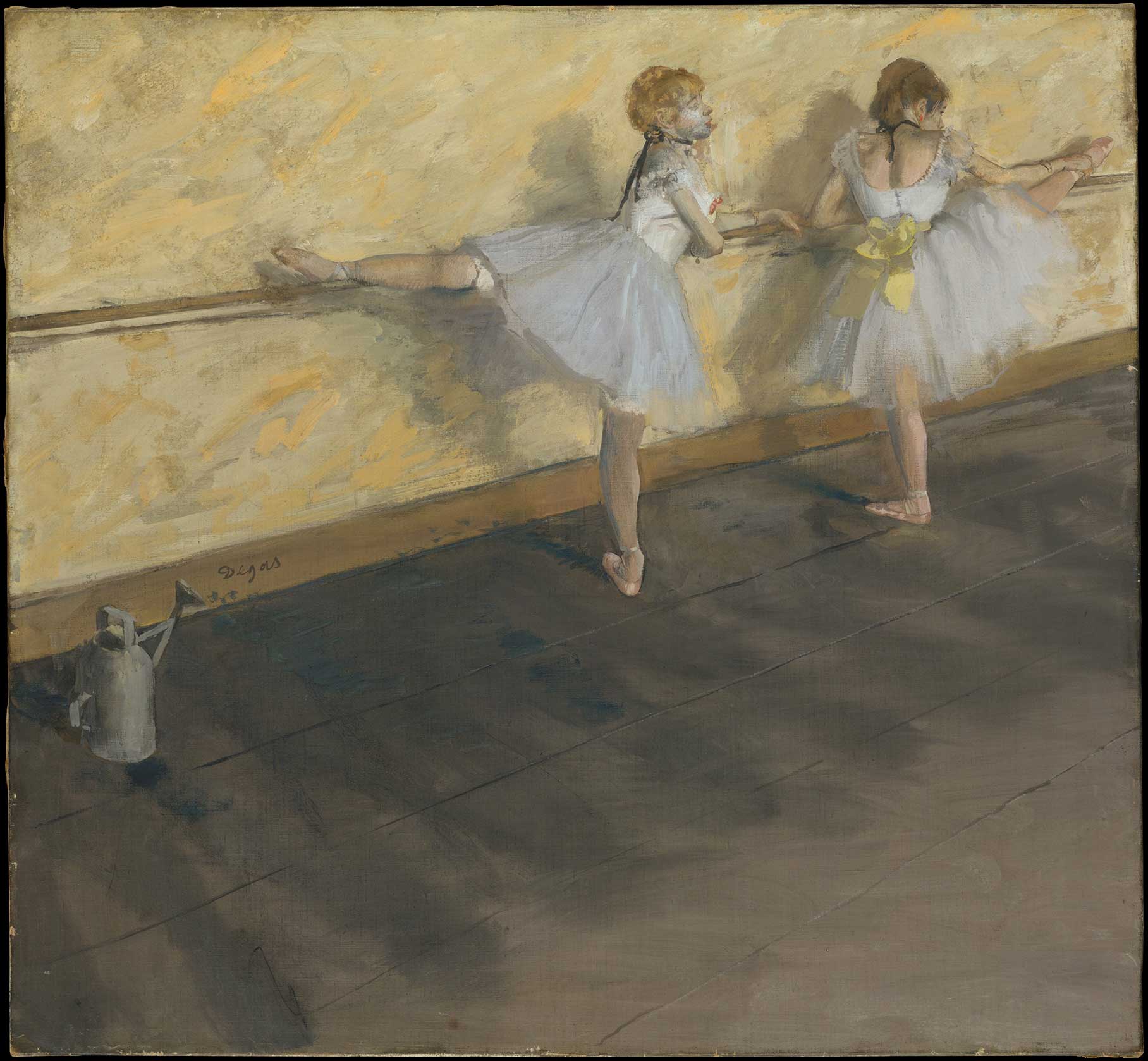
“Dancers Practicing at the Barre” by Edgar Degas, 1877, Metropolitan Museum of Art, New York
Why Dancers?
For Edgar Degas, dancers were not merely performers. They embodied the tension between grace and discipline, beauty and labor. In works like “The Dance Class” (1874) and “Dancers Practicing at the Barre” (1877), Edgar Degas examined the human body in motion, as well as in vulnerability. The ballerinas are rarely portrayed as idealized figures; instead, they are often seen stretching, adjusting their costumes, or pausing in fatigue.
Edgar Degas himself once remarked, “People call me the painter of dancers. It has never occurred to them that my chief interest in dancers lies in rendering movement and painting pretty clothes.” The fascination was less with performance than with the craft, repetition, and dedication behind it.
The Influence of Edgar Degas on Modern Art
Edgar Degas’s work stands at the intersection of classical tradition and radical innovation. He trained in the academic style, but by experimenting with unusual vantage points, cropped perspectives, and the pastel medium, he prefigured the modern styles of photography and film. His approach influenced not only the Impressionists—though Edgar Degas often resisted that label—but also 20th-century movements such as Cubism and Expressionism. Artists from Picasso to Francis Bacon drew upon Edgar Degas’s experiments with form and movement. His ballerinas, seen today, echo in contemporary art, dance photography, and even fashion editorials, reminding us that the pursuit of beauty through discipline is a timeless theme.
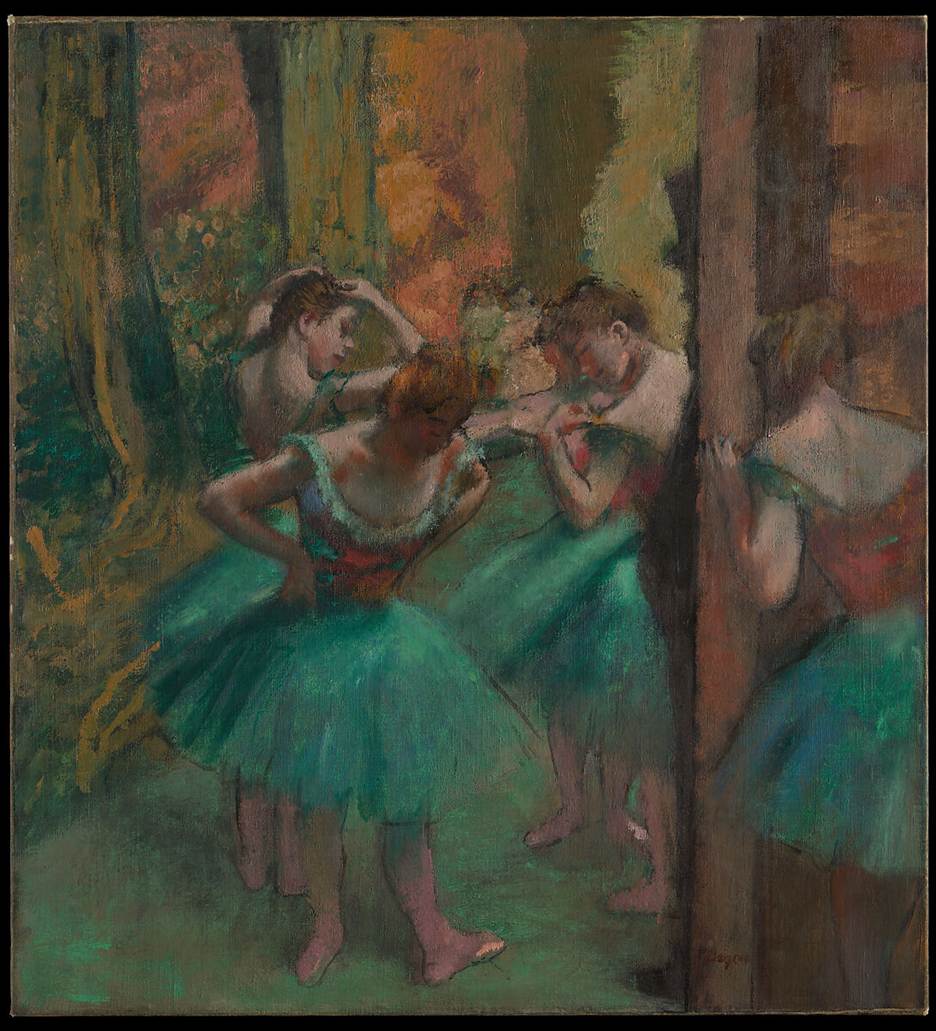
“Dancers, Pink and Green” by Edgar Degas, ca. 1890, Metropolitan Museum of Art
Why Degas Matters Today
In today’s context, Edgar Degas’s dancers embody more than elegance. They remind us of perseverance, of the unseen labor behind public beauty, and of the resilience required to perfect an art form. As society increasingly celebrates authenticity and process over perfection, Edgar Degas feels startlingly modern.
To view Edgar Degas is to glimpse the balance between fleeting movement and eternal art—a reminder that behind every performance, there is a human story.
Browse museum-quality art prints that move you at ArtworkSale.
Featured Works
The Dance Class (1874) – Metropolitan Museum of Art
Dancers Practicing at the Barre (1877) – Metropolitan Museum of Art
Dancers, Pink and Green (ca. 1890) – Metropolitan Museum of Art