Selecting the right size wall art can transform a room, but it’s a decision that often feels daunting. Whether you’re decorating a cozy nook or a sprawling living area, the size of your artwork plays a pivotal role in creating balance, harmony, and visual impact. At ArtworkSale, collectors, designers, and first-time buyers can find the perfect fit for their spaces. Here’s a comprehensive guide, blending practical tips and expert advice, to help you choose the right size wall art with confidence.
Why Size Matters in Wall Art
Right size wall art can elevate a space, making it feel cohesive and intentional. Too small, and the piece gets lost; too large, and it overwhelms. The key is finding a balance that complements your room’s dimensions, furniture, and aesthetic. By considering the size of your wall, the furniture below it, and the overall vibe of the space, you can select artwork that feels just right.
Measure Your Space for the Right Size Wall Art
Before you fall in love with a piece, grab a tape measure. Start by measuring the width and height of the available wall space. A general rule of thumb is that wall art should occupy 60–75% of the wall’s width, especially when placed above furniture like a sofa, bed, or console. For example:
- Above a sofa or console: The right size wall art should span roughly 2/3 to 3/4 of the furniture’s width. For a 96-inch sofa, aim for artwork that’s 64–72 inches wide.
- Empty walls: For a standalone statement piece, consider the wall’s full dimensions and aim for artwork that fills the space without crowding it.
This approach ensures your artwork feels proportionate and anchors the room effectively.
Leave Breathing Room for Balance
To achieve a polished look, leave 6–12 inches of space between your artwork and the ceiling, floor, furniture, or adjacent frames. This “visual breathing room” prevents the space from feeling cramped and allows the right size wall art to shine. For instance, if you’re hanging a piece above a headboard, ensure there’s enough space to create a sense of openness and elegance.
Standard Print Sizes for Easy Framing
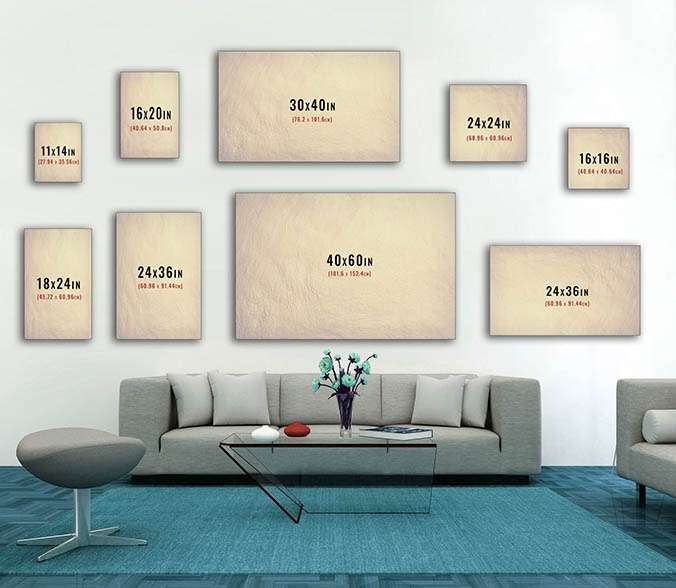
Choosing standard print sizes can simplify framing and ensure your artwork fits seamlessly into your space. Here’s a breakdown of standard sizes and their ideal uses:
- Small (8×10″, 11×14”): Perfect for tight spaces, gallery walls, or layering with other pieces.
- Medium (16×20″, 18×24”): Versatile for mid-sized walls, either as a standalone piece or in pairs.
- Large (24×36″, 30×40”, 36×48”): Ideal for statement walls or anchoring larger rooms like dining areas or living rooms.
- Oversized (40×60” and up): Best for dramatic impact in open floor plans or rooms with high ceilings.
Standard sizes are often more cost-effective for framing, as pre-made frames are widely available, which saves you from the costs of custom framing.
Visualize Before You Commit
Are you unsure how the right size wall art will look in your space? Use painter’s tape or cut out a paper template to map out the dimensions on your wall. For example, if you’re considering a 24×36″ piece, tape out that exact size and step back to assess. This simple trick helps you visualize scale and placement, reducing the risk of sizing mistakes. You can also use augmented reality tools, available on certain platforms, to digitally preview artwork in your space.
Consider the Room’s Purpose and Style
The function and aesthetic of a room can influence the right size wall art. In a bedroom, a medium-to-large piece above the bed creates a calming focal point. In a living room, an oversized piece can make a bold statement, especially in open-plan homes. For smaller spaces, such as hallways or bathrooms, opt for smaller pieces or a gallery wall to add personality without overwhelming the area. Always align the artwork’s size with the room’s scale and purpose for a harmonious look.
Go Bigger for Impact
One of the most common mistakes in choosing wall art is selecting pieces that are too small. Larger pieces draw the eye, anchor the room, and convey a sense of confidence. If your space allows, don’t shy away from bold, oversized artwork — it can transform a room and make it feel more intentional. For example, a 40×60” giclée print above a dining table can create a stunning focal point that ties the space together.
Account for Frame and Mat Impact
When calculating the right size wall art, remember that frames and mats add to the overall dimensions. A 24×36” print with a 2-inch frame and mat can increase the total size by 4–8 inches in each direction. Factor this into your measurements to ensure the final piece fits your wall perfectly. If you’re opting for a minimalist look, a frameless canvas or gallery-wrapped piece can keep the focus on the artwork itself.
Test with Temporary Placement
Before committing to a purchase, test the size by hanging a temporary placeholder, like a sheet or poster board, cut to the artwork’s dimensions. Live with it for a day or two to see how it feels in the space. This step is especially helpful for large or oversized pieces, ensuring you’re confident in your choice.

Final Thoughts
Choosing the right size wall art doesn’t have to be overwhelming. By measuring your space, considering standard sizes, visualizing placement, and opting for larger pieces when in doubt, you can select artwork that enhances the beauty and balance of your home. At ArtworkSale, we make it easy for you to find the perfect giclée print to suit your space. Ready to make a statement? Explore our ArtworkSale collection and find the right size wall art for your home today.
Right size. Right space. Right impact. – ArtworkSale
Over 100 independent artists | Museum-quality giclée prints | Worldwide shipping