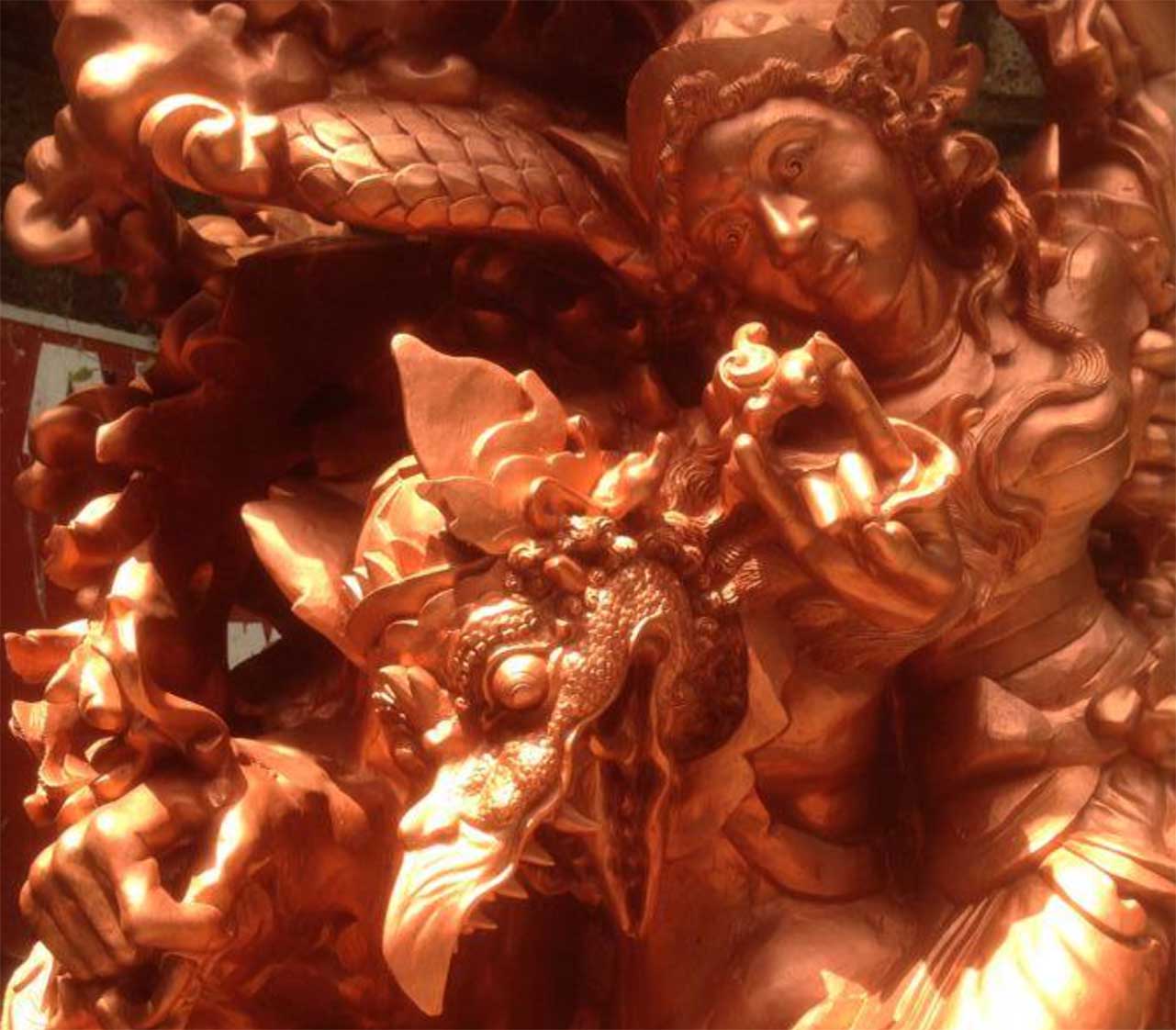
Balinese wood carving, a revered art form, transforms simple blocks of wood into intricate sculptures that reflect Bali’s rich cultural heritage. ArtworkSale proudly presents this captivating art to its readers, showcasing its historical and artistic significance. Known as the Island of the Gods due to the profound influence of Balinese Hinduism, Bali has long been a hub for traditional Hindu-Javanese wood carving, which has evolved from religious expressions into a globally recognized craft.
Roots of Balinese Wood Carving
Balinese wood carving began around the 11th century, shaped by Buddhist and Hindu traditions. By the 14th century, Bali had flourished under the Majapahit Kingdom, a period when the island was a colony, and artisans excelled in depicting religious mythology through wood, alongside painting, goldsmithing, and stone carving. These early carvings were not decorative but served sacred purposes, adorning temples, palaces, and ceremonies with figurines of deities and protective masks designed to ward off evil spirits.
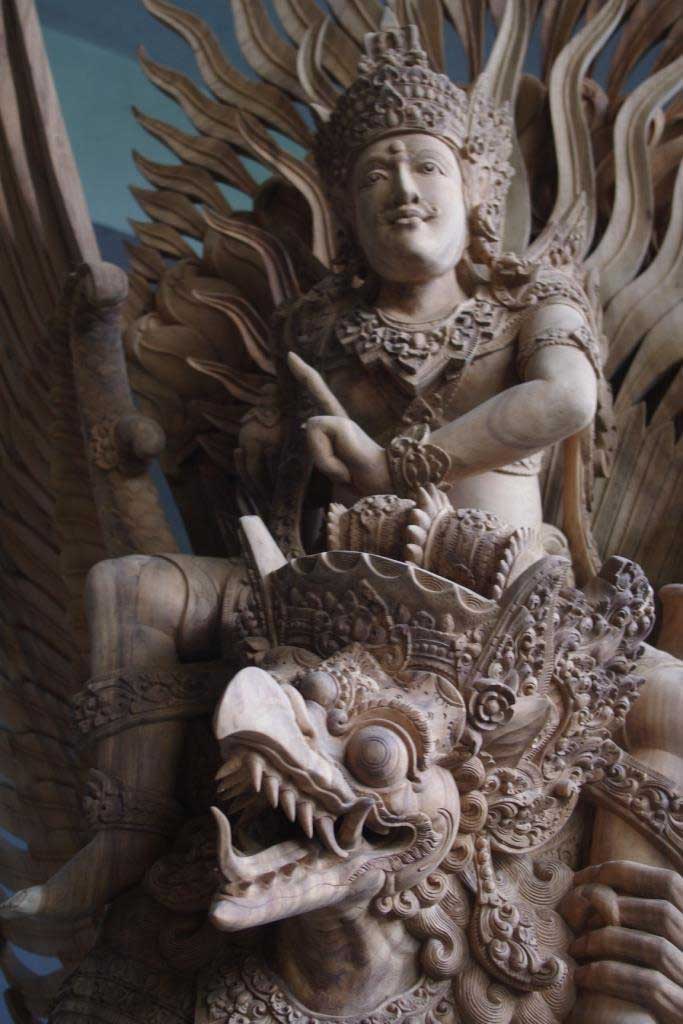
Photograph: Ada Garuda Gallery, Bali, Indonesia.
Evolution Through Western Influence
The 1920s marked a turning point as Western artists, including Walter Spies, Rudolf Bonnet, and Donald Friend, arrived in Bali, sparking a renewed interest in Balinese wood carving—their avant-garde perspectives blended with local techniques, inspiring artisans to incorporate everyday life into their work. By the 1930s, a surge in tourism fueled demand for these carvings as exotic souvenirs, with Dutch traders introducing them to the Netherlands, where they gained significant popularity. This commercialization expanded the craft internationally, allowing artisans to explore new creative techniques and designs.
Ethnologist Miguel Covarrubias described Balinese art in the 1930s as a vibrant blend of “peasant liveliness” and the refined classicism of Hinduistic Java, noting that it underwent a “liberating revolution” as artists began depicting rural life alongside traditional themes. The Pitamaha Artist Guild, formed during this time, played a pivotal role in modernizing Balinese wood carving while preserving its cultural essence.
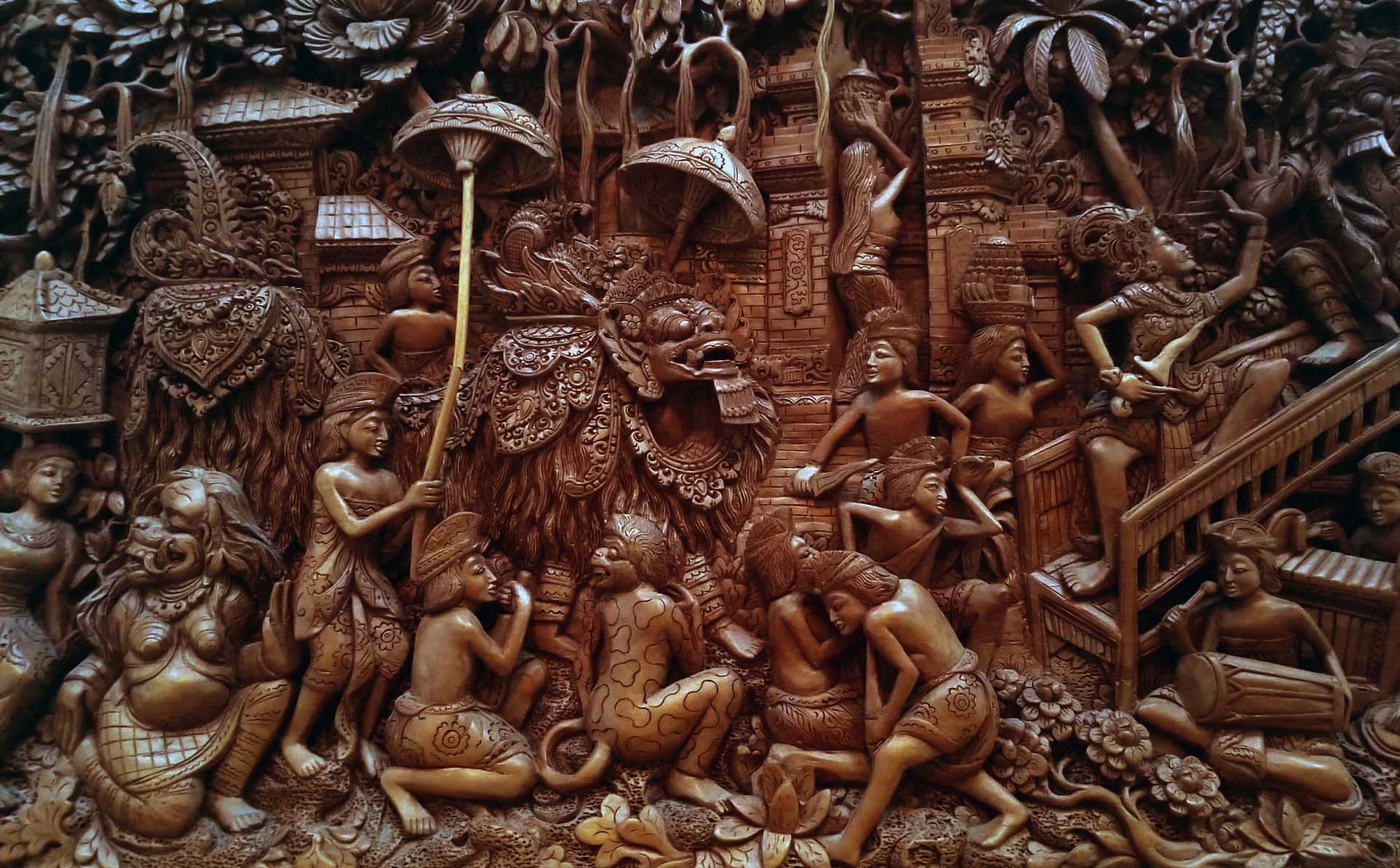
Photograph courtesy of Lucia Darmadi.
Masters of the Craft
The transition years of the 1930s and 1940s saw Balinese wood carving embrace modern influences, including Art Deco styles that persisted into the 1970s. Notable artisans like Ida Bagus Nyana pushed boundaries by experimenting with form, elongating or shrinking body parts in sculptures to capture daily life with minimal wood manipulation. Tjokot, another master, used gnarly tree trunks and logs, letting the wood’s natural form guide his work. Ida Bagus Tilem, a pioneer in the village of Mas, elevated the craft by utilizing wood’s natural deformations to convey human emotion, training young sculptors to select wood based on its expressive potential. Today, Mas is widely regarded as the heart of Balinese wood carving.
Cultural Preservation Amid Commercial Growth
As Balinese wood carving gained global recognition, concerns arose about the potential loss of this cultural treasure to international markets. In 1936, the Pita Maha Foundation was established to revive traditional arts, enhance artisans’ skills, and preserve Balinese identity. Following World War II, additional foundations upheld these ideals, culminating in the establishment of the Puri Lukisan Museum in 1956. This museum showcases a collection of paintings and wood carvings, preserving the historical and artistic legacy of Balinese art. Carvings are crafted from a variety of woods, including albesia, jackfruit, crocodile wood, rain tree, hibiscus, sandalwood, teak, and mahogany. They range from affordable, mass-produced souvenirs to high-quality, hand-carved pieces priced between $200 and $5,000, adorning homes, businesses, and major hotels worldwide while retaining their ceremonial significance.
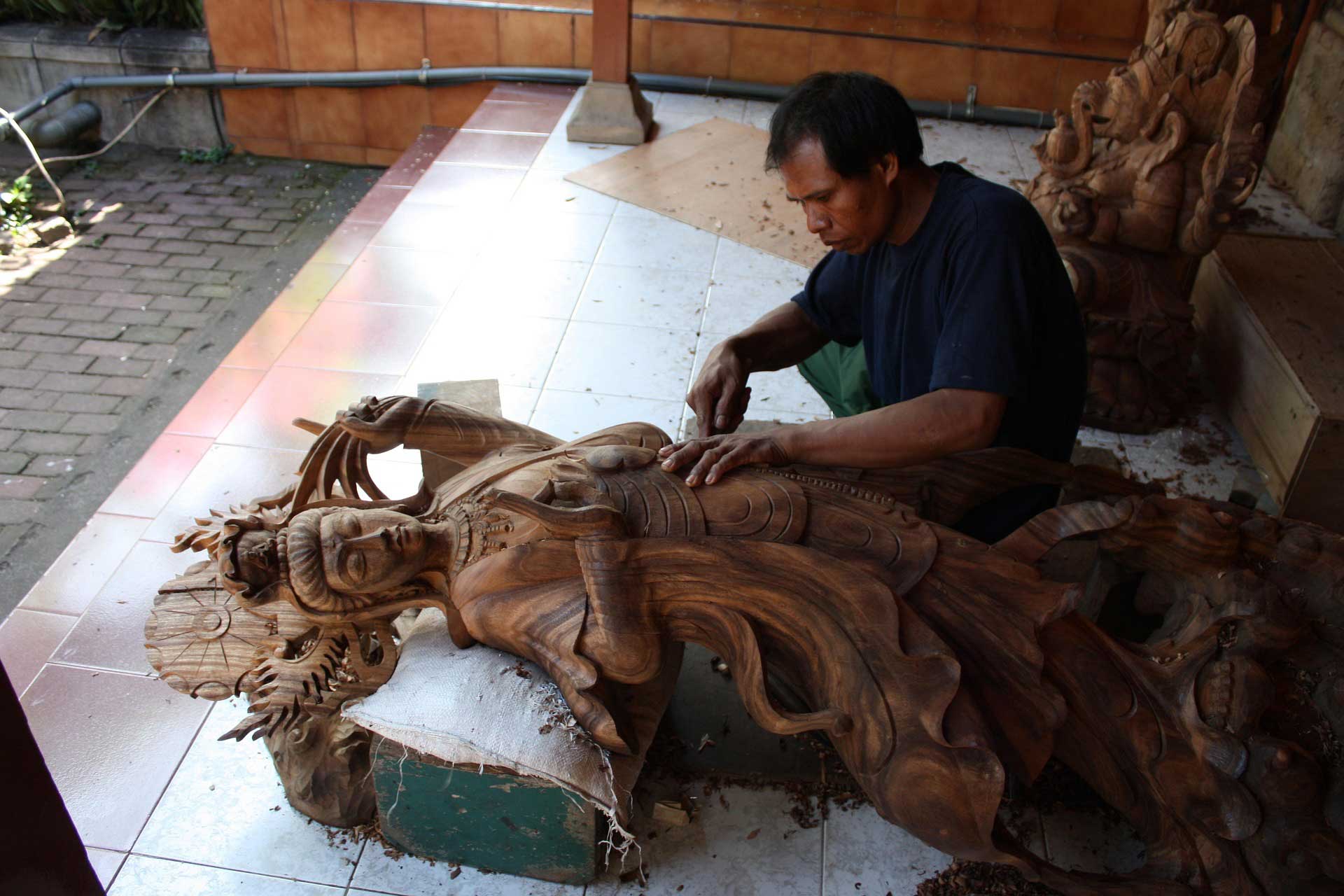
Photograph of a woodcarver, Bali, Indonesia.
A Living Legend: I Made Ada
I Made Ada, a third-generation master woodcarver, is a living icon of Balinese wood carving. Specializing in exquisitely carved sculptures and three-dimensional panels, he is renowned for his depictions of the Garuda, a bird-like symbol of peace and the vehicle of the Hindu god Vishnu. His intricate panels, often illustrating the Mahabharata and Ramayana epics, adorn presidential palaces, museums, and private residences globally. His work has been gifted to world leaders like Barack Obama, Vladimir Putin, and Ronald Reagan. Using premium woods like teak, ebony, and sandalwood, often accented with 22-karat gold paint or leaf, Ada’s pieces range from affordable to $20,000. His artistry was featured in a 1999 CNN special on Indonesian arts, and you can watch him craft his iconic Garuda here:
Challenges and the Future
Balinese wood carving faces the risk of fading as younger generations pursue modern interests. However, dedicated artisans and master carvers like I Made Ada are committed to passing down their skills, training new talent to preserve this cultural heritage. Through their efforts, the intricate art of Balinese wood carving continues to thrive, captivating audiences worldwide.
Main image: Courtesy of Ada Garuda Gallery, Bali, Indonesia.